

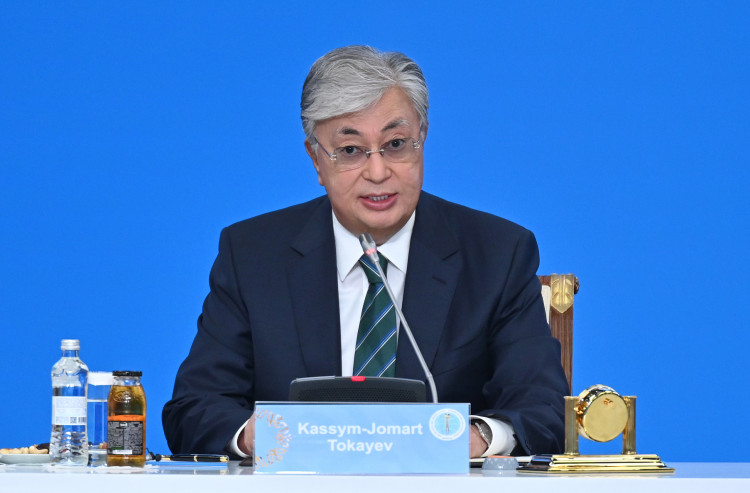

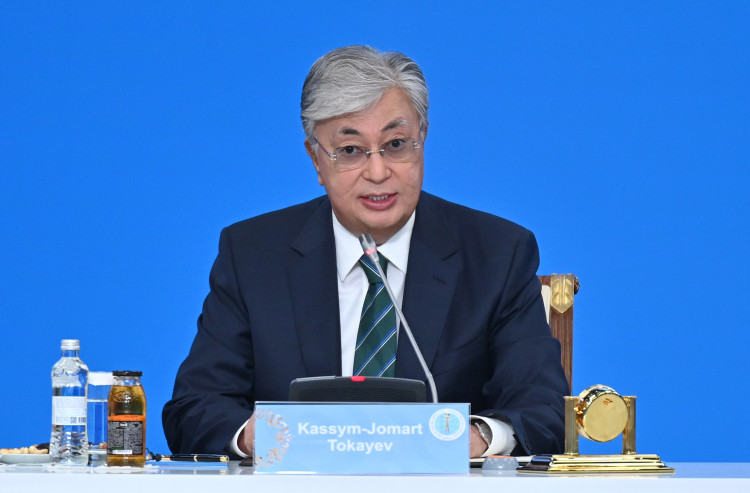
Aqorda Memleket basshysy Q.K.Toqaevtyń Álemdik jáne dástúrli dinder kóshbasshylarynyń VII seziniń ashylýynda sóilegen sózin jariialady, - dep habarlaidy "Ult aqparat".
***
Qurmetti dinbasylar!
Qadirli meimandar!
Hanymdar men myrzalar!
Qonaqjai Qazaq jerine qosh keldińizder! Álemdegi eń bedeldi rýhani kóshbasshylardyń basyn qosyp, dialog qurý – biz úshin zor mártebe. Qazaqstanǵa alǵash ret memlekettik saparmen kelgen Vatikannyń jáne Katolik shirkeýiniń basshysy Rim Papasy Frantsiskige iltipatymdy bildiremin. Siz dinder jáne halyqtar arasyndaǵy ózara túsinistikti nyǵaitýǵa zor úles qostyńyz.
Kóne Ál-Azhar islam ýniversitetiniń Bas imamy, joǵary mártebeli doktor, Sheih Ahmad at-Taiebtiń elimizge arnaiy kelgenine qýanyshtymyn. Qazaqstan halqy ózińizdi qazirgi musylman áleminiń kórnekti oishyly retinde qurmet tutady. Siz din jolynda adal qyzmet atqaryp, adamgershilik qundylyqtardy dáripteýge ólsheýsiz eńbek sińirip kelesiz.
Ia rad privetstvovat vysokih predstavitelei Rýsskoi pravoslavnoi tserkvi. Pravoslavnye hristiane vnosiat vesomyi vklad v ýkreplenie edinstva i soglasiia v Kazahstane. S teplotoi vspominaiý svoiý nedavniýiý besedý s Patriarhom Moskovskim i vseia Rýsi Kirillom, kotoryi vyrazil podderjký ýsiliiam nashei strany v razvitii mejkonfessionalnogo dialoga.
Ortamyzda Izraildiń Bas ashkenazi ravvini David Laý jáne Izraildiń Bas sefard ravvini Itshak Iosef otyr. Biz elimizdegi iýdei qaýymynyń ókilderimen birge bul saparǵa erekshe mán beremiz. Barshańyzǵa shaqyrýymyzdy qabyl alyp, Qazaqstanǵa kelgenderińiz úshin alǵys aitamyn. Bul beibitshilikti saqtaýǵa jáne órkenietaralyq dialogty nyǵaitýǵa bárimizdiń múddeli ekenimizdi kórsetedi.
Ózgeriske toly ári belgisizdik beleń alǵan qazirgi zamanda búgingi basqosýdyń airyqsha máni bar. Birikken Ulttar Uiymynyń, basqa da halyqaralyq uiymdardyń basshylaryna, saiasatkerlerge jáne sarapshylarǵa rizashylyǵymdy bildiremin. Sezd ótkizý týraly bastamamyzǵa sizderdiń qoldaý kórsetkenderińiz elimiz úshin óte mańyzdy.
Asa qadirli dinbasylar!
Qurmetti qaýym!
Álemdik jáne dástúrli dinder kóshbasshylarynyń sezi búginde jahandyq deńgeidegi órkenietaralyq dialog alańyna ainaldy. Bul forýmdy ótkizýge Qazaqstannyń bastamashylyq etýi beker emes. Sebebi Qazaq jeri ǵasyrlar boiy Batys pen Shyǵystyń arasyndaǵy kópir bolyp keledi. Uly dala tórinde nebir alyp kóshpeli imperiialar ómir súrgen. Dini ustamdylyq – olardyń bárine ortaq sipat. Mysaly, elimizdiń Almaty oblysynda Qoilyq degen ortaǵasyrlyq qalanyń orny bar. Sol jerde qazba jumystary júrgizildi. HII–HIV ǵasyrlarda osy qalada islam, hristian jáne býddizm dininiń ǵibadathanalary irgeles turǵany anyqtaldy. Shyn máninde, Qazaqstan aýmaǵy barlyq álemdik dinderdiń kieli oryndary kórinis tapqan karta ispetti. Musylmandar Arystan babtyń Qoja Ahmet Iasaýidiń kesenelerine, Beket atanyń jerasty meshitine jáne basqa da qasietti jerlerge baryp, ziiarat etedi.
V Taraze nahoditsia samaia drevniaia mechet VIII veka, postroennaia na fýndamente hristianskogo hrama nestorianskogo tolka. My vse gordimsia pravoslavnoi sviatynei – Voznesenskim kafedralnym soborom v Almaty. Etot ýnikalnyi istoricheskii i arhitektýrnyi pamiatnik – odin iz samyh vysokih dereviannyh hramov v mire.
V Severo-Kazahstanskoi oblasti raspolojen Katolicheskii dýhovnyi tsentr. Zdes v gody stalinskih repressii i Vtoroi mirovoi voiny byla spasena ot golodnoi gibeli soslannaia v Kazahstan polskaia obshina. V pamiat ob etom ýstanovlena statýia Bogomateri s rybami, kotorýiý osviatil Papa Ioann Pavel II.
Sakralnym dlia iýdeev vsego mira iavliaetsia mavzolei rebe Levi Itshaka Shneersona v Almaty. V stolitse Kazahstana nahoditsia samaia bolshaia sinagoga v Tsentralnoi Azii «Beit Rahel Habad Liýbavich».
Narod Kazahstana vpital v sebia traditsii raznyh tsivilizatsii i religii, dýh tolerantnosti i otkrytosti. Poetomý printsip «edinstvo v mnogoobrazii» dlia nas iavliaetsia osnovopolagaiýshim.
V nastoiashee vremia v Kazahstane v garmonii i soglasii jivýt predstaviteli bolee 100 etnosov, svobodno deistvýiýt okolo 4 000 religioznyh obedinenii, predstavliaiýshih 18 konfessii.
Biz muny elimizdiń baǵa jetpes bailyǵy jáne biregei artyqshylyǵy dep sanaimyz. Elimizdegi jáne búkil álemdegi dialog pen yntymaqtastyqty nyǵaitý – Qazaqstan saiasatynyń mańyzdy bóligi. Búgingi Sezd – sonyń aiqyn kórinisi. Osyǵan deiin ótken forým deklaratsiialarynda radikalizm, zorlyq-zombylyq jáne qaqtyǵystar tabandy túrde synaldy. Qandai ideiany jeleý etse de, mundai áreketterdi esh aqtaýǵa bolmaityny anyq aityldy.
Qazirgi kúrdeli kezeńde dinbasylardyń bir ústel basynda jinalýy airyqsha mańyzdy. Olar kez-kelgen másele boiynsha ortaq paiymǵa kelip, til tabysýǵa bolatynyn búkil adamzatqa pash etýde. Menińshe, Sezdiń eń basty missiiasy da, erekshiligi de – osy.
Your Holinesses!
Dear participants of the Forum!
The theme of this Congress is the development of humanity in the post-pandemic period.
The spread of the coronavirus has significantly affected all spheres of life – economy, politics, and social relations.
Unfortunately, the global health care system was not prepared to effectively cope with this global challenge.
The acute phase of the fight against this insidious disease triggered both an increase in narrow nationalism – vaccine nationalism, export and travel bans – but also a weakening of international institutions.
Therefore, given the risk of new pandemics, a careful rethinking of global cooperative health mechanisms is required.
Furthermore, new approaches are necessary in international trade and economic cooperation, as well as in the support for developing countries.
Quarantine measures disrupted supply channels and had a negative impact on services, tourism, transport, and other industries.
The crisis hit developing economies hardest, reinforcing poverty and inequality, accelerating global inflation.
We are faced once again with food shortages in the least developed regions of the world.
At the same time, geopolitical confrontation between major powers has intensified, increasing tensions in different parts of the world.
The previous system of international security is collapsing.
Extremism and terrorism remain serious threats.
The sanctions-induced energy crisis threatens the achievement of carbon neutrality we had just set.
This is not a goal we can afford to ignore. Natural disasters over the last two decades, mostly related to climate change, amounted to approximately three trillion dollars.
Unfortunately, tension, mutual distrust, and even hostility are returning to international relations.
What can we rely on to counter today's challenges? History provides only one answer – goodwill, dialogue and cooperation. There are no other guarantees of success.
Kazakhstan has always favored solving any disputes exclusively at the negotiating table in the spirit of the UN Charter. Threats, sanctions, and the use of force do not solve problems.
At such moments we must turn to humanistic ideals.
Their main custodians are, of course, traditional religions.
The absolute value of human life, respect for each other's interests, mutual assistance, openness, equality and justice – these are the pillars of new security system.
That is why the moral authority and voice of spiritual leaders are crucial today.
In this regard, I would like to note the great historical significance of the call of Pope Francis and the Grand Imam of al-Azhar, Dr. Ahmed El-Tayeb, outlined in the document “Human Fraternity for World Peace and Living Together”.
Today, we all depend on each other – no global problems can be solved without constructive dialogue and mutually beneficial cooperation.
Our country has consistently promoted principles aimed at achieving peace, comprehensive security and sustainable progress in the international arena.
Kazakhstan has been one of the leaders of the global movement against nuclear weapons. We initiated the Conference on Interaction and Confidence-Building Measures in Asia, which is supposed to become Organization. We have chaired the UN Security Council, the OSCE, and the Organization of Islamic Cooperation.
We also support and work hard to promote a constructive development agenda at the regional and global levels.
In our domestic agenda, we also place a high priority on strengthening unity, consolidation and effective dialogue.
Today, Kazakhstan has embarked on an ambitious program of reforms.
Their success largely depends on the solidarity of our multi-ethnic and multi-confessional nation and the peace and harmony in our land. We are building a Just Kazakhstan to make our state effective and prosperous.
Therefore, we make emphasis on political transformation of our country.
Our new economic policy is aimed at ensuring a more fair distribution of the national income and increasing the welfare of all citizens equally.
We want international trade and investment partnerships to be drastically enhanced.
In the energy and extractive industries, we consistently raise environmental requirements, and expand the use of renewable energy sources.
Your Holinesses!
Dear participants of the Congress!
The challenges we face today require an understanding of the role of religions and spiritual leaders in global processes.
In this regard, I would like to present several themes for discussion.
Firstly, all traditional religions share a set of basic principles: the sacred value of human life, mutual support, and the rejection of destructive rivalry and hostility.
I am convinced that these principles should form the basis of a new world system today.
We need a fundamental modernization and harmonization of theoretical concepts and practical approaches in culture, politics, economics and society.
To revive the true spirit and meaning of civilization, we need a large-scale reformation in all spheres of life.
Secondly, we see that, while politicians argue, spiritual leaders desire and seek to draw closer together.
This is a pivotal trend. It is the efforts and dialogue of spiritual leaders that can eventually show humanity a way out of the current confrontation.
The experience of this large-scale dialogue strengthens spiritual leaders to actively pursue various peacemaking initiatives.
This is essential to ending military conflicts and the suffering of people in conflict zones around the world.
Spiritual leaders are the guardians of the conscience of humanity. Therefore, who better than you to show the way to mutual trust, goodness and peace.
Now, more than ever, humanity is in need of solidarity.
To build a new system of international security, we all need a new global movement for peace. I believe the role of spiritual leaders in this matter is paramount.
Thirdly, given that we now live in a digital world, it is important to systematically promote the ideals of humanism and enduring spiritual values.
We see how new technologies are radically changing all spheres of human life before our eyes. The pandemic has only accelerated and deepened this process.
Digital communications, the Internet, and social networks play a huge positive role, erasing borders between people in all corners of the earth.
But at the same time, we observe how societies are being fragmented and polarized under the influence of digital technology.
For many, the virtual world already replaces the real one.
Therefore, in the new digital reality it is necessary to raise the question of cultivating spiritual values and moral guidelines in a new way.
The cult of knowledge and education without the right system of education of the younger generations will not lead humanity to universal progress and prosperity.
Religion has always fulfilled this basic function of education.
The Quran, the Bible, the Torah, and other scriptures are imbued with ideas of humanism, compassion, and mercy.
They reject aggression and radicalism, condemn violence, and preach tolerance and moderation.
The high mission of religious leaders in the modern era is to bring these fundamental truths to the people.
Qurmetti Sezge qatysýshylar!
Qazirgi kúrdeli kezeńde sezdiń tarihi máni artyp otyr. Óitkeni, halyqtar arasyndaǵy kelisimdi nyǵaityp, pandemiiadan keiingi álemde ádiletti qoǵam qurý – bárimizge ortaq mindet. Osy oraida, ashyq dialog ornatý óte mańyzdy. Din kóshbasshylarynyń VII sezi tyń ideialarǵa jol ashyp, barshamyzdy biik belesterge jetkizedi dep senemin.
Bizdiń múddemiz jáne nietimiz – bir. Bárimiz de beibit ári berekeli bolashaqqa qadam basýdy qalaimyz. Osy igi maqsatqa birge jeteiik!
Sezd jumysyna tabys tileimin!
Duǵa-tilekterińiz qabyl bolsyn!


